How Long Does Car Recovery Take? Here's What to Expect
Car Recovery Times Explained: How Long Should You Expect to Wait?
If your car has stopped at the roadside, the first question is usually not about the fault. It is how long does car recovery take, and how quickly can someone get you moving or get the vehicle somewhere safe. The honest answer is that recovery times vary, but most jobs follow a clear pattern. Response time, roadside assessment, loading, travel distance and destination all affect the overall timeline.
For a driver stuck on the hard shoulder, outside work, or at home before school run time, those details matter. For a garage, dealer or fleet operator, they matter even more because every delay affects bookings, staff and customers. A realistic view helps set expectations and avoids surprises.
How long does car recovery take in most cases?
In straightforward cases, a local recovery job can be completed within 60 to 90 minutes from arrival if the vehicle is being taken a short distance. That includes checking the vehicle, making it safe to load, winching or lifting it onto the recovery vehicle, securing it properly and transporting it to the agreed destination.
That does not mean every call is finished that quickly. There are really two separate timeframes to think about. The first is how long it takes for a recovery operator to reach you. The second is how long the full job takes once they arrive.
A nearby breakdown in normal traffic might mean a quick response and a short total job time. A vehicle stranded on a busy route, in poor weather, or far from the drop-off point can take much longer. If the job involves accident damage, wheel loss, steering lock, or awkward access, loading alone may take more time than a simple breakdown pickup.
The main factors that affect recovery time
The biggest factor is location. A car stopped on a residential road in Newbury is generally easier to reach and recover than one on a motorway verge, in a multi-storey car park, or down a narrow country lane. Access changes everything. A clean pickup with room to position the recovery vehicle is usually quicker than a job where the operator has to manage tight angles, traffic or blocked wheels.
Traffic conditions also have a direct effect. A 24/7 service can respond at any hour, but road conditions still shape the speed of arrival. Peak-time congestion, motorway incidents and diversions can add delay even when the recovery team is already on the move.
Vehicle condition is another major part of the answer. If the issue is a flat battery or a minor roadside fault, the vehicle may not need full recovery at all. A quick roadside repair can be faster than loading and transport. If the car has been in a collision, has suspension damage, has lost a wheel, or cannot be rolled freely, recovery becomes more technical and slower by nature.
Distance to destination matters too. Taking a car to a local garage is very different from transporting it across counties or further afield in the UK. Trade customers arranging dealer transfers, auction collections or long-distance haulage should expect the loading stage to be only one part of the job. The transport leg may be the longest part by far.
Real Experience: Every Recovery Is Different
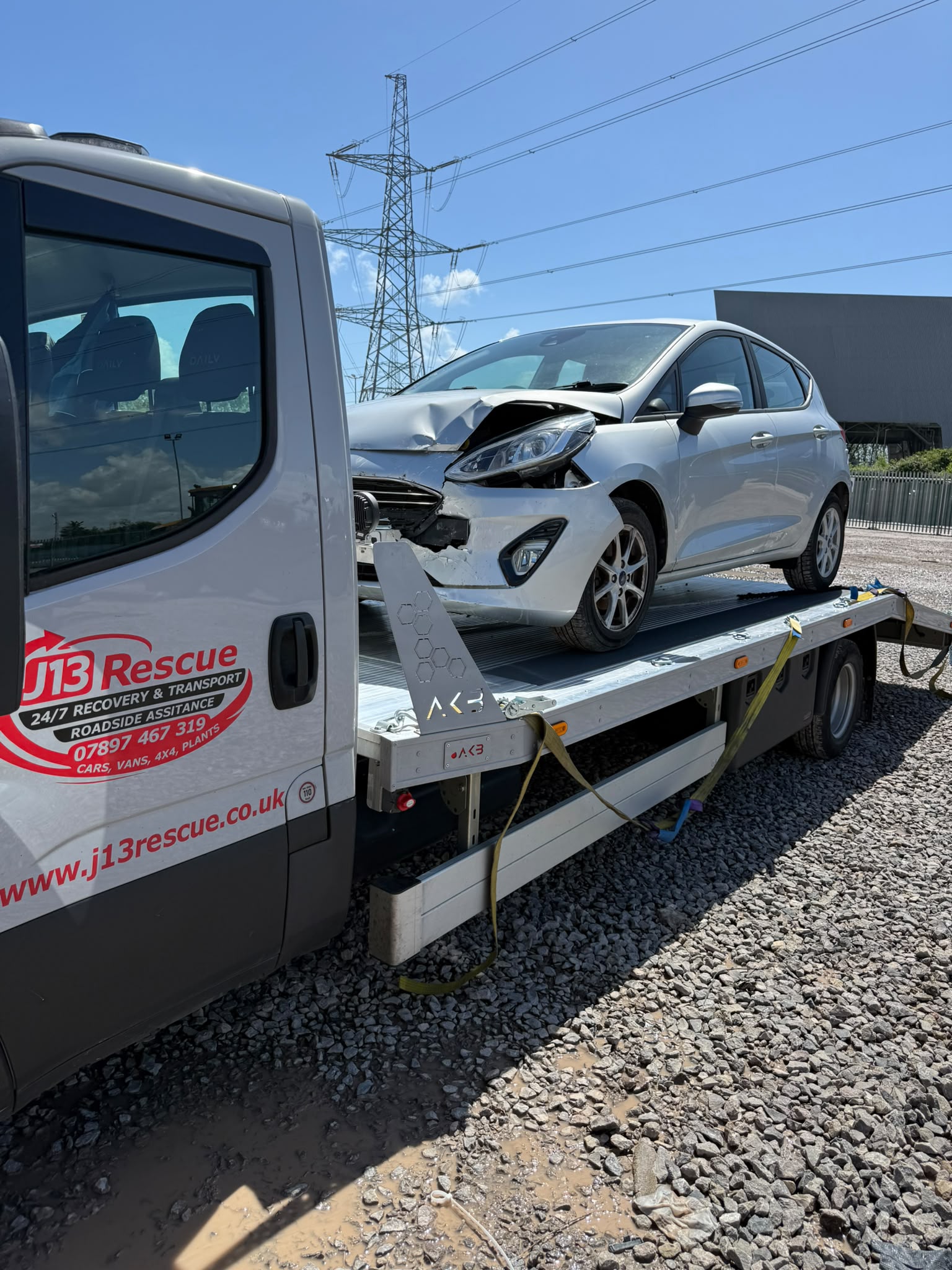
At J13 Rescue, we've completed recoveries ranging from simple roadside collections in Newbury to long-distance vehicle transport across the UK. One job might involve a vehicle with a flat battery that is back on the road within minutes, while the next could be a non-runner with locked wheels requiring careful loading and secure transport.
This is why we always avoid giving unrealistic arrival or completion times. Every recovery is different, and factors such as location, vehicle condition, traffic and destination all influence how long the job will take. Our priority is always to recover the vehicle safely rather than rush the process.
Response time versus total recovery time
People often mix these up. Response time is the wait for help to arrive. Total recovery time is the full period from the first call to the vehicle being delivered or made roadworthy.
If a recovery operator reaches you in 30 to 60 minutes, that is only the first stage. Once on site, they still need to assess the vehicle, decide whether roadside assistance is possible, position the recovery vehicle safely, complete the loading process and then transport the car to the destination.
For trade clients, this distinction is especially important. If a garage is waiting for a customer vehicle to be collected and returned to site, the key question is not just when the driver will arrive but when the vehicle will actually be back on the premises and ready for the next step.
When roadside assistance is quicker than recovery
Not every breakdown needs a tow. If the issue is a flat battery, wheel change, minor electrical issue or another fault that can be dealt with safely on site, roadside assistance may be the fastest outcome. In those cases, the total time can be much shorter than a full recovery because there is no loading or transport stage.
That said, the operator still needs to confirm the fault properly. What looks like a dead battery can be a charging issue. What seems like a puncture may be tyre damage that makes onward travel unsafe. A professional assessment matters because the fastest option is only useful if it is also the right one.
Why some recoveries take longer than expected
The jobs that overrun are usually the ones with complications. Accident recovery is a common example. Damaged steering, locked transmission, broken suspension parts or deployed airbags can all make the vehicle harder to move and secure. In some cases, specialist equipment or a different loading method is needed.
Safety checks also take time, and rightly so. Rushing a recovery is how damage happens. A good operator will confirm the vehicle is stable, use the correct attachment points, protect low bodywork where needed and secure the load properly before moving off.
Then there is destination delay. If the car is going to a workshop that is closing, a storage site with restricted access, or a customer who is still making arrangements, the vehicle may be ready to move before the drop-off is. That can extend the full job even when the recovery itself is efficient.
What drivers can do to avoid delays
A clear call-out helps. The more accurate the information, the faster the operator can prepare. Exact location, vehicle make and model, registration, fault symptoms and whether the car can roll all matter. If the steering is locked, if a wheel is damaged, or if the vehicle is in a difficult position, say so at the start.
It also helps to know where you want the vehicle taken. If you are deciding between home, a garage or another address after the operator arrives, that can slow things down. For commercial customers, having booking details and delivery instructions ready makes the process much more efficient.
If you are waiting at the roadside, keep your mobile phone available and stay safe. A missed call when the driver is trying to locate you can easily add extra time.
How long does car recovery take for long-distance transport?
Long-distance recovery or vehicle transport works to a different timescale. The collection itself may still take 20 to 40 minutes on site in a straightforward case, but the delivery stage depends on route length, traffic, timing windows and destination arrangements.
For example, moving a vehicle locally within Berkshire is one thing. Moving it from Berkshire to another part of the country is another. Trade movements such as auction collections, dealer transfers and fleet reallocations are often planned carefully, but they still depend on practical route conditions and access at both ends.
This is why reliable communication matters as much as speed. A professional recovery and transport provider should give a realistic arrival window rather than overpromising and then missing it.
What a realistic expectation looks like
For many local breakdowns, a reasonable expectation is a prompt response followed by a recovery process that takes around an hour or two in total once the operator is on scene. For more technical recoveries or longer-distance transport, expect a longer window.
The right question is not just how fast can it be done. It is how fast can it be done safely, properly and without creating another problem. That matters to a stranded motorist, and it matters just as much to a dealer moving stock or a fleet operator trying to minimise downtime.
At J13 Rescue, the focus is simple: respond quickly, assess the situation properly and get the vehicle moved safely with as little disruption as possible. That applies whether it is an urgent roadside breakdown or a planned trade movement.
If you need recovery, the best approach is to expect a quick response where possible, allow for variables that cannot be controlled, and choose a provider that gives you a straight answer from the start. When your vehicle is off the road, clear timing and safe handling matter more than guesswork.
Need Car Recovery?
If you need vehicle recovery in Newbury, Berkshire, along the M4 or nationwide, J13 Rescue provides fast response, safe recovery and honest arrival estimates.
Whether it's a local breakdown, accident recovery or long-distance vehicle transport, we'll explain what to expect and keep you updated throughout the job.
📞 Call 07897 467 319 for immediate assistance or a free quote.
You may also find these guides helpful:
https://www.j13rescue.co.uk/blog/how-to-get-roadside-assistance-fast/
https://www.j13rescue.co.uk/blog/vehicle-recovery-near-me-what-to-check-before-you-call/