How to Get Roadside Assistance Fast
Fast Roadside Assistance in Newbury, West Berkshire & the M4 Corridor
A flat battery in a supermarket car park is frustrating. A breakdown on the A34 at night is a safety issue. If you need to know how to get roadside assistance, the priority is simple: get yourself safe, make the right call, and give clear information so help can reach you without delay.
For most drivers, the process feels more stressful than it needs to. People are often unsure who to ring, what details to give, or whether the vehicle can be fixed at the roadside or needs recovery. The right approach saves time and usually gets you moving again faster.
How to get roadside assistance without delay
Start with safety. If the vehicle is still moving, steer to a safe place as soon as you can. On a normal road, that may be a lay-by, hard standing, or somewhere clear of traffic. On a motorway, use the hard shoulder if it is available and safe to reach. Switch on your hazard lights straight away.
Once stopped, assess whether it is safer to stay in the vehicle or get out. On a motorway or busy dual carriageway, passengers should usually leave by the left-hand side if it is safe and wait behind the barrier, well away from traffic. On a quiet residential road, staying in the vehicle may be the safer option if stepping out puts you in danger. It depends on where you are, the time of day, visibility, and traffic speed.
Then call a roadside assistance provider. If you already have breakdown cover through your insurer, bank account, vehicle warranty, or a motoring organisation, use that number first. If you do not have cover, you can usually still contact a local recovery operator and request immediate assistance as a one-off call-out.
When you ring, keep the information clear and practical. Give your exact location, the vehicle registration, make and model, what the problem is, and whether the vehicle is in a dangerous position. If you are on a motorway, look for the nearest marker post, emergency telephone marker, junction number, or service area sign. Small location details make a big difference to response time.
What to say when you call for roadside help
The quickest call is usually the clearest one. The operator does not need a long explanation. They need accurate details that help them prioritise and dispatch correctly.
Tell them where you are first. If you are unsure, use your phone map, nearby road signs, business names, landmarks, or what direction you were travelling. Then explain the issue in plain terms. For example, say the car will not start, you have a puncture, there is smoke from the engine bay, the clutch has failed, or you have been involved in a collision.
You should also mention anything that affects access or urgency. That includes whether you are blocking traffic, carrying children, stranded in poor weather, or in an unsafe area. If the vehicle is in a multi-storey car park, underground bay, or restricted-height location, say so early. Not every recovery vehicle can access every site.
If you are a trade customer such as a garage, dealer, or fleet operator, add the collection point, delivery point, vehicle condition, and whether the keys are present. That helps avoid wasted time and makes planned transport or urgent recovery easier to schedule.
What roadside assistance can actually help with
Roadside assistance covers more than major breakdowns. In many cases, the issue is minor and can be dealt with at the roadside. Common examples include flat batteries, jump starts, punctures, misfuelling, lost keys, non-start faults, and minor mechanical or electrical problems.
If the fault cannot be repaired safely where the vehicle is, the next step is recovery. That may mean transport to your home, a garage, a dealer, or another destination agreed during the call. In accident cases, recovery is often the safest and quickest option even if the vehicle still moves, especially where there may be hidden damage.
This is where expectations matter. Roadside assistance does not always mean an instant repair. Sometimes the best service is a fast assessment followed by safe vehicle recovery. A good operator will tell you plainly which is more realistic.
How to get roadside assistance if you do not have cover
Not having a membership policy does not mean you are stuck. You can still call a local roadside and recovery company directly and arrange a paid call-out. For many drivers, this is the quickest option when there is no existing cover in place.
The main trade-off is cost versus flexibility. Breakdown memberships can reduce the cost of future call-outs, but they may come with conditions, waiting periods, or limits depending on the policy. A direct call-out can be more straightforward when you need help immediately and do not want to deal with policy wording on the hard shoulder.
If you are arranging help privately, ask what service is likely to be provided based on the fault. For example, a dead battery may be a roadside job. A snapped suspension spring or gearbox failure will almost certainly need recovery. Asking this upfront helps you understand what you are paying for and what happens next.
While you wait for assistance
After the call, keep your phone available and nearby. Recovery drivers often ring to confirm your exact location or access details. If your battery is low, conserve charge by closing unused apps and avoiding unnecessary calls.
Stay visible and stay safe. At night or in poor weather, keep your hazard lights on if the vehicle still has power. If you have a warning triangle, use it only where it is safe and legal to do so. Do not place a triangle on a motorway.
If the vehicle is in a dangerous position and there is an immediate risk to life, contact the emergency services. Roadside assistance is for breakdown and recovery support. It is not a substitute for emergency response where there is a serious collision, injury, fire, or live traffic hazard.
It also helps to have your essentials ready. Keep your keys, phone, driving licence if needed, and any breakdown policy details to hand. If you know the vehicle has locking wheel nuts and there is a puncture, make sure the key is accessible. Small things like that can save time once help arrives.
Choosing the right roadside assistance provider
Speed matters, but so does capability. A provider should be able to tell you clearly whether they offer roadside repair, vehicle recovery, accident recovery, and longer-distance transport. If your vehicle needs specialist handling, that matters more than a vague promise of quick attendance.
For private motorists, the best provider is usually one that communicates clearly, answers promptly, and can either fix the issue or recover the vehicle without fuss. For trade customers, consistency is just as important as speed. Garages, dealers, and fleets need a partner who can represent them professionally, handle planned movements, and deal with urgent jobs at short notice.
A local operator with 24/7 coverage is often a strong choice because they know the area, can reach local roads quickly, and still support longer-distance work when recovery or transport needs go beyond the immediate area. That combination matters if you break down near Newbury but need the vehicle moved elsewhere, or if you manage multiple vehicles and need one point of contact.
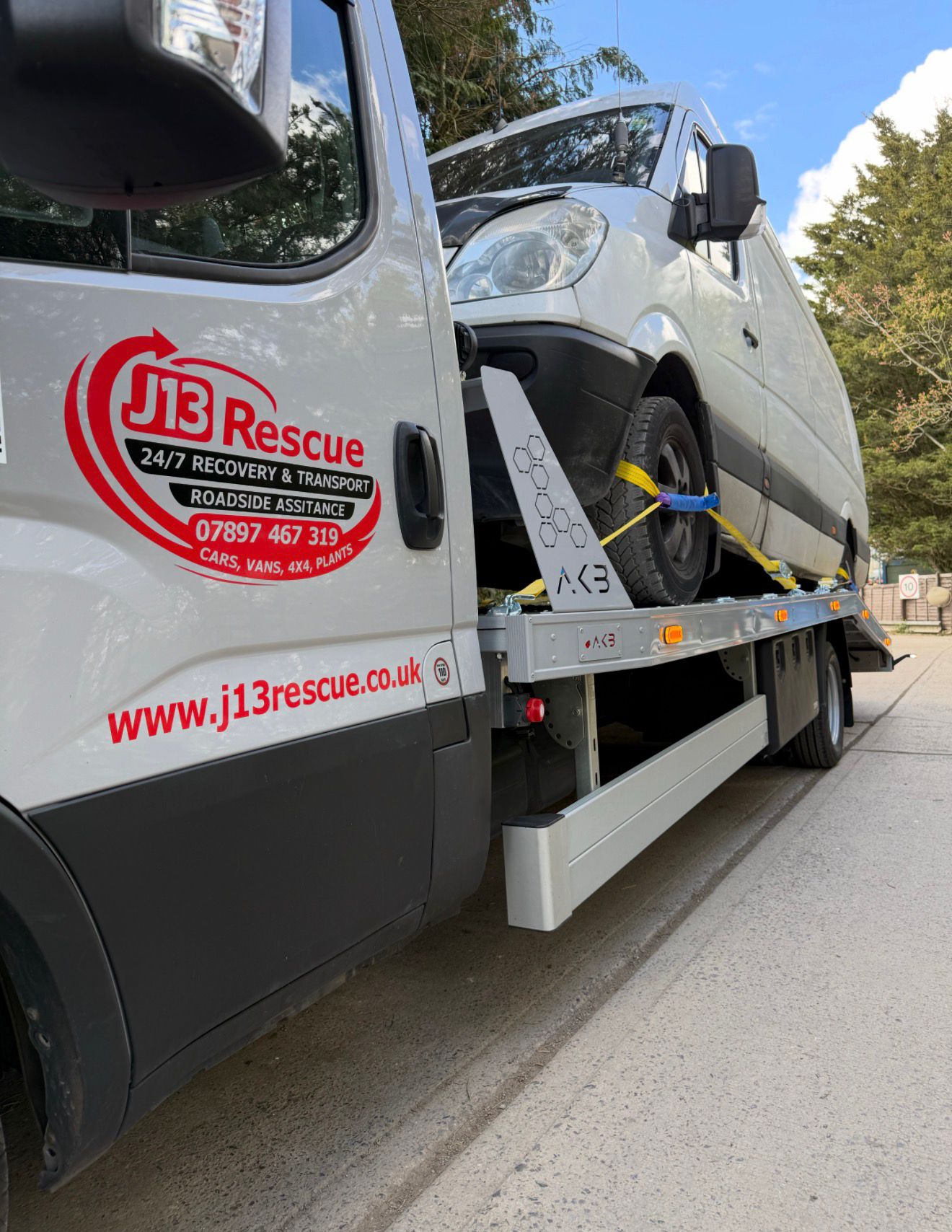
J13 Rescue works in that space, providing roadside help, recovery, and vehicle transport for both motorists and trade clients.
How to prepare before you ever need roadside assistance
The easiest breakdown to deal with is the one where your details are already in order. Keep your phone charged, save your breakdown or local recovery number, and know whether your insurance, bank, or warranty includes assistance. Many drivers are covered and do not realise it until after they have paid privately.
It also makes sense to carry a few basics in the vehicle: a charged phone cable, torch, high-visibility jacket, warm layer, and bottled water. In winter or on long journeys, those items are not overkill. They are practical.
For trade customers, preparation means having a clear process for authorising recoveries, sharing vehicle details, and confirming collection instructions. The faster those details are passed over, the faster the vehicle can be moved and the less disruption there is to customers and workshop schedules.
Breakdowns are rarely convenient, but the response does not need to be chaotic. Make safety the first step, keep the call clear, and use a provider that can tell you exactly what happens next. When that part is handled properly, the situation becomes simpler very quickly.
A calm, accurate call is often the fastest route back on the road.
Need Roadside Assistance?
If you've broken down in Newbury, Berkshire, along the M4 corridor or surrounding areas, J13 Rescue is available 24 hours a day.
Whether you need roadside assistance, vehicle recovery or nationwide transport, we'll assess the situation quickly and provide the safest solution.
📞 Call 07897 467 319 for immediate assistance or a free quote.